
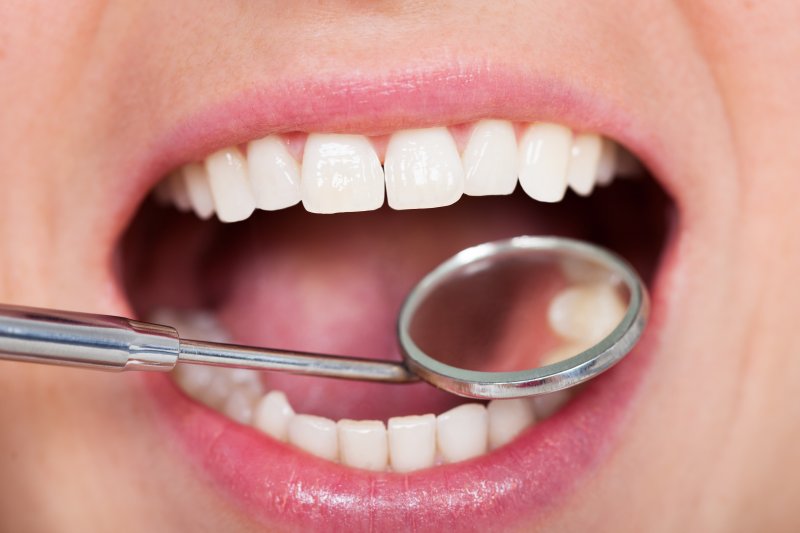
While you’re probably well aware of how your dentist carefully inspects your teeth, gums, and other oral tissues for signs of trouble during your routine exams and cleanings, you may not know that they also check for signs of oral cancer. Detecting oral cancer early can help a person treat the problem effectively and reach the best possible outcome, and your dental checkups can be your first line of defense against this dangerous menace. Since April is Oral Cancer Awareness month, here’s a quick guide to a few important facts about this condition and how your dentist can help you detect it.
What Are the Symptoms of Oral Cancer?
Oral cancer may show itself through symptoms like:
- Sores or ulcerations that do not clear up after about two weeks
- Red, white, or black splotches on the soft tissues of the mouth
- Abnormal growths that bleed easily when touched
- A lump, hard spot, or leathery patch in the soft tissue
- Unusual growths
- Denture sores that do not heal after adjustments
- A firm, painless lump that can be felt along the outside of the neck that does not go away after at least two weeks
In cases of oral cancer, it is unlikely that these symptoms will resolve themselves.
What Are Risk Factors for Oral Cancer?
Certain genetic and lifestyle factors may increase your risk of oral cancer, including:
- Drinking heavily
- Tobacco use
- Being older than 50
- Contracting the virus HPV16
- Oral cancer in one’s family history
However, there are cases of oral cancer developing in people who do not exhibit any of these risk factors.
How Can My Dentist Help Detect Oral Cancer?
The American Dental Association recommends seeing your dentist every six months for routine exams and cleanings so they can monitor your oral health, address problems in their early stages, and recommend better oral hygiene habits. During these appointments, your dentist will also take a few moments to inspect your mouth for signs of oral cancer. If any concerning symptoms are detected, your dentist will be happy to refer you to an appropriate specialist who can diagnose and treat the problem.
However, it’s important to remember that your dentist detecting potential signs of oral cancer does not necessarily mean you have the condition, and visiting a specialist for a diagnosis may simply serve to rule the possibility out. Seeing your dentist regularly is one of the best ways to preserve your oral and overall health.
About the Author
Dr. Barry Miller earned his dental degree at Ohio State University and regularly participates in continuing education coursework to keep his skills sharp and current. He also has a certificate from and maintains membership with the American Academy of Facial Esthetics. His office in Marysville offers general, restorative, cosmetic, and emergency dentistry. To schedule your next checkup, contact his practice online or dial (937) 642-3434.